
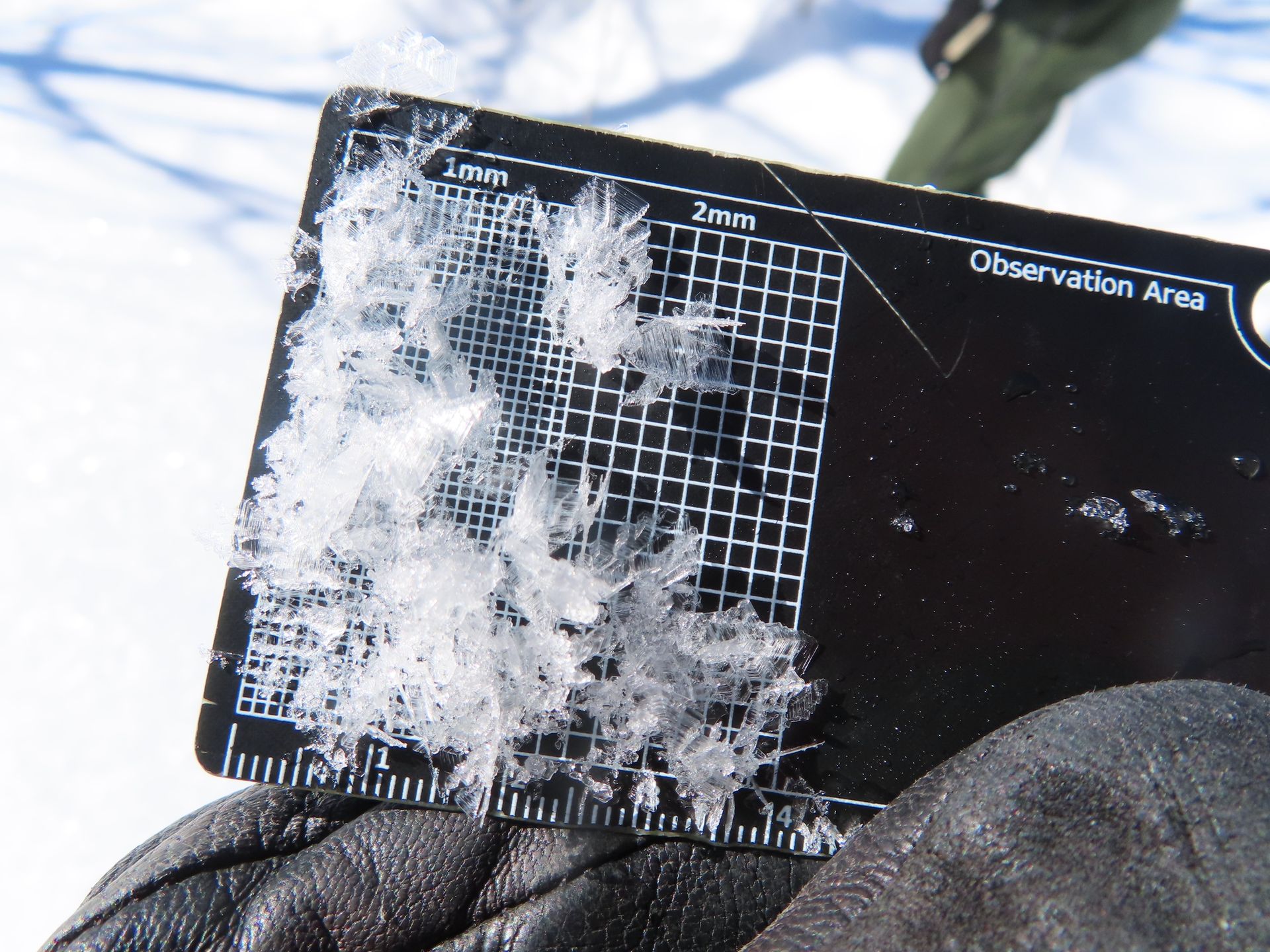
Learn how delicate surface hoar frost forms on the snow surface and then creates dangerous avalanche conditions when buried by new snow.
Surface hoar is both beautiful and treacherous - a delicate frost formation that creates one of winter's most dangerous weak layers. These feathery crystals form on the snow surface during clear, cold nights when water vapor in the air condenses directly into ice crystals – similar to how frost forms on your car windshield. The perfect recipe for surface hoar requires specific conditions: clear skies that allow for radiational cooling, high humidity, and calm or very light winds.
These delicate ice formations can grow to impressive sizes, typically ranging from 2 to 20 millimeters, though in ideal conditions they can become even larger. They're most common in sheltered areas like creek bottoms or forest openings where calm, humid air can pool. On a crisp morning, you might see them sparkling like diamonds in the early sunlight, their feather-like crystals standing upright on the snow surface.
The real trouble begins when these delicate crystals get buried by new snow. Unlike rounded grains that bond well with new snow, surface hoar creates a persistent weak layer that can last for weeks or even months. Think of it like laying a sheet of feathers between two pieces of plywood – they create a perfect sliding surface that can result in dramatic and dangerous avalanches.
What makes surface hoar particularly treacherous is its persistence and widespread nature. These crystals are particularly dangerous because:
They can grow quite large, creating significant weak layers that are slow to stabilize
They're often widespread across terrain features, creating extensive weak layers
Once buried, they're very slow to break down or stabilize, sometimes persisting for months
They can survive minor storms and continue to be reactive
They're often involved in large, destructive avalanches that can propagate across entire slopes
Learning to identify surface hoar before it gets buried is an essential skill for backcountry travelers. In the early morning, look for:
Sparkly crystal growth on the snow surface that catches the light
Feather-like or needle-like appearances, standing upright
Growth often visible without magnification, though a magnifying loupe helps study the details
Crystals that collapse easily when touched
Formation in sheltered areas, especially where humid air collects
The best time to search for surface hoar is during early morning hours before the sun affects the snow surface. Focus your attention on:
Shaded slopes where surface hoar can persist longer
Creek bottoms and drainage areas where humid air pools
Forest openings protected from wind
North-facing aspects where formations often develop more robustly
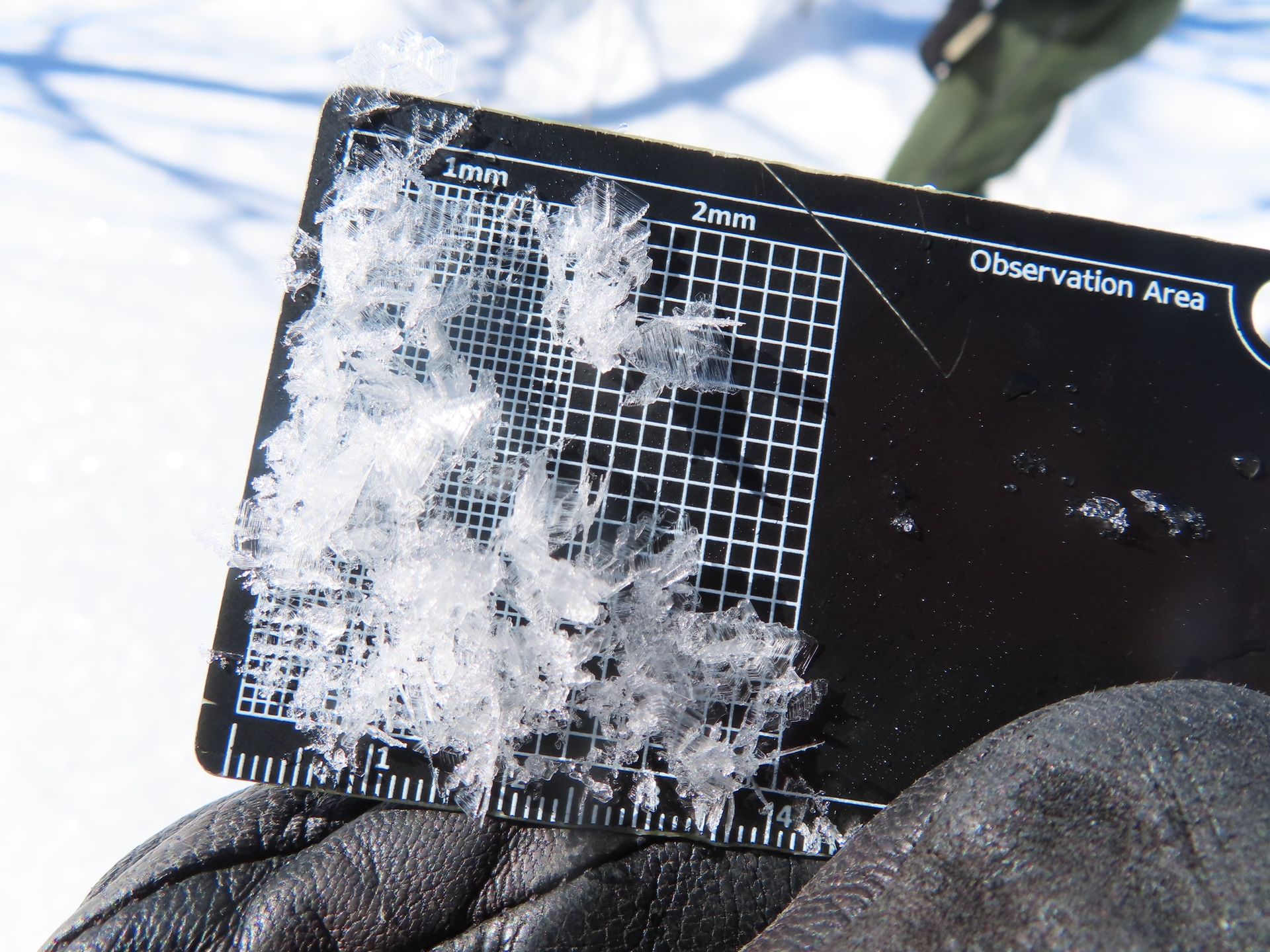
For backcountry travelers, tracking surface hoar formation and burial is crucial for safe route planning. When you know surface hoar has been buried:
Consider gentler terrain options until the layer proves unreactive
Pay special attention to shaded aspects where the layer might be better preserved
Watch for signs of natural avalanche activity on similar aspects and elevations
Perform stability tests focusing on the buried surface hoar layer
Document the date and location of surface hoar formation to track its presence through the season
Regular observation and documentation become your best tools. Keep track of:
When and where you observe surface hoar forming
The size and extent of the crystals
Dates when new snow buries the layer
Any signs of instability after burial
Understanding these crystal types and their implications for stability is fundamental to safe backcountry travel. Surface hoar serves as a powerful reminder that the snowpack is a complex, dynamic environment that demands our respect and attention. While its beauty might catch your eye, never let it catch you off guard – staying alert to surface hoar formation and burial could make the difference between a safe day in the backcountry and a dangerous encounter with one of winter's most notorious weak layers.